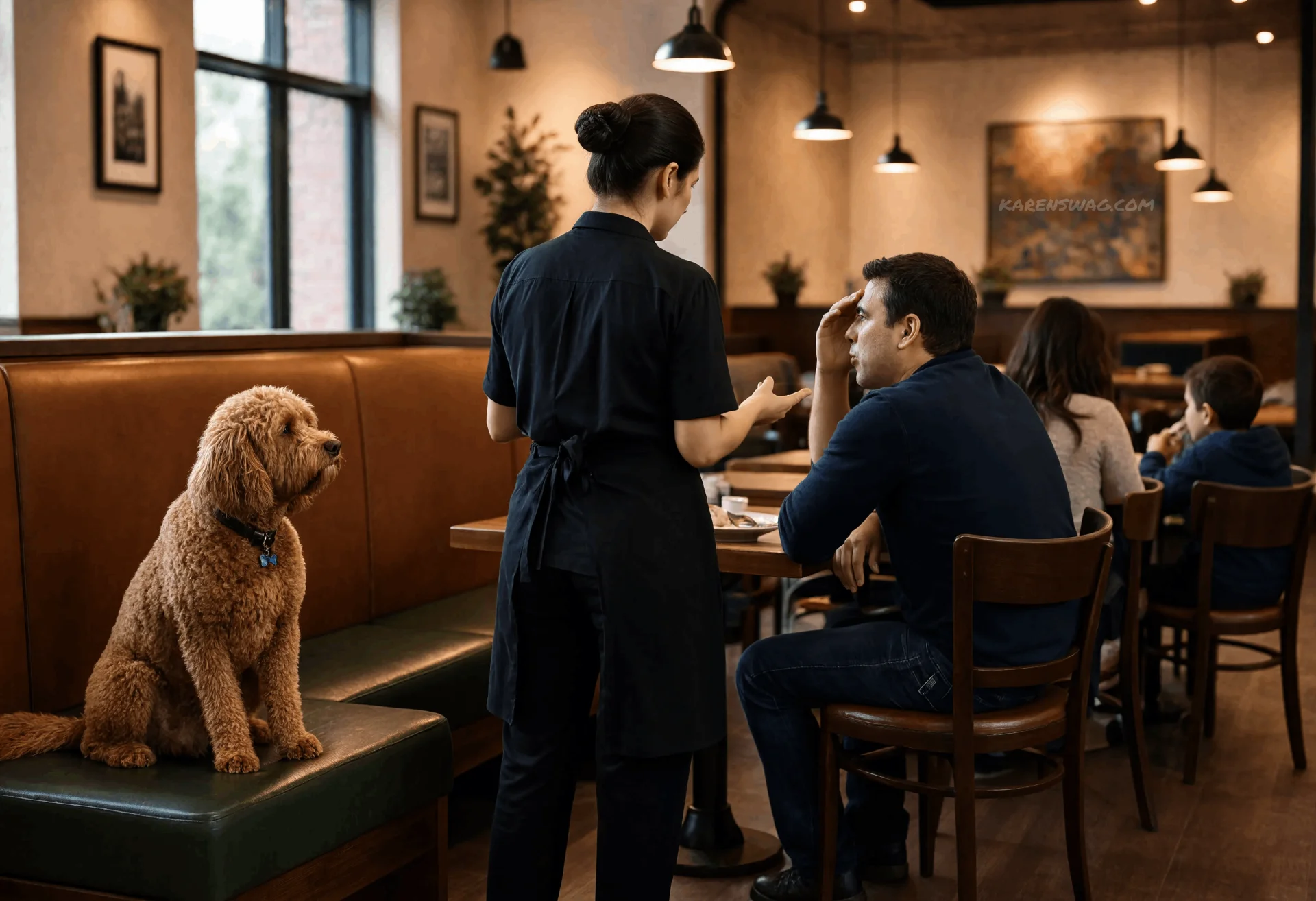
The restaurant manager was willing to let the dog stay. She had only one firm condition: the poodle needed to get off the booth, stay on the floor, and remain out of the aisle.
According to a diner who witnessed the exchange, that modest boundary was enough to turn a quiet meal into an argument about discrimination and unfair treatment.
A Quiet Dining Room Gets Complicated
The poster said they were eating out with their family over the weekend. Most of the restaurants in the area were packed, but one establishment was unusually quiet, operating at what the poster estimated was roughly 15 percent of its capacity.
The family took a booth and placed its order. Before the food arrived, another party of three entered with a poodle and settled into a nearby booth.
The dog was placed directly on the booth seat. In the poster's account, it appeared restless and repeatedly moved toward the table. Members of the party kept pulling it back down, only for the same behavior to happen again.
The poster interpreted the poodle's conduct as that of a high-maintenance family pet rather than a working service animal. However, the poster also made clear that this was only an impression based on what they observed. They did not know the guest, the dog's training history, or whether the animal performed a disability-related task.
The Manager Draws a Line
A manager approached the table and asked about the dog. The poster described her manner as polite and said she explained that the restaurant could accommodate qualifying service animals.
The dog's owner initially described the poodle as an emotional support animal. The manager responded that emotional support animals do not receive the same public-access protections as service animals under the Americans with Disabilities Act.
At that point, according to the poster, the guest changed her description. She now said the poodle was a registered service animal protected by federal disability law.
The poster later acknowledged in the discussion that the conversation might not have been remembered word for word. Still, they recalled hearing the term “registered” more than once during the exchange.
Rather than demanding paperwork or asking the guest to disclose personal medical information, the manager moved to the practical issue in front of her. She reportedly said that if the poodle was a service animal, it could remain inside. It could not, however, sit on the furniture, climb onto the table, or block the aisle.
The Claim Changed, but the Rule Did Not
The manager's position left room for the party to stay and finish the meal with the dog nearby. The only required change was where the animal sat.
The guest did not accept that compromise. The poster said she became visibly upset and began arguing with the manager. Words including “discrimination” and “unfair” came up repeatedly during the back-and-forth.
The manager did not respond by escalating the confrontation or attempting to settle the dog's status on the spot. She simply repeated the restaurant's condition: the animal could stay, but it had to remain on the floor.
That distinction became the center of the dispute. By the poster's telling, the manager was no longer trying to exclude the poodle from the restaurant. She was enforcing a seating and sanitation boundary after watching the party repeatedly remove the dog from the table area.
Even with the dining room mostly empty, the manager did not make an exception. An unused booth did not become a dog seat simply because there were plenty of tables available.
Commenters Focus on the Service Animal Rules
The account prompted a wider discussion among commenters about the confusion surrounding service animals and emotional support animals.
Several commenters pointed out that there is no official federal registry that grants a dog service-animal status. They said legitimate access does not depend on an identification card or online certificate. Others noted that businesses may ask limited questions about whether a dog is required because of a disability and what task it has been trained to perform.
Commenters also emphasized that calling an animal a service dog does not give it permission to behave without limits. Several said an animal that is out of control or disruptive may still be required to leave, although the original restaurant manager did not go that far. Her reported instruction concerned keeping the poodle off the booth and table.
One commenter who identified themselves as a service-dog handler described how poorly controlled pets can make public access harder for people who rely on properly trained animals. Another, who said they had worked as a restaurant manager, described the difficult position staff face when they must respect disability protections while also handling disruptive animals and concerned customers.
Those reactions added context, but they did not establish whether this particular poodle was a genuine service animal. The original poster remained careful on that point and did not claim to have proof either way.
The Entire Party Walks Out
The standoff ended without anyone being served. Rather than keep the poodle on the floor and continue with the meal, the guest and the other two members of her party left the restaurant before ordering.
On the way out, the woman announced that she would never return. The manager did not reverse the rule, and the poster reported no further confrontation or later update.
The dog's actual status therefore remained unresolved. The only definite outcome in the poster's account was that the restaurant offered to let the animal stay under a basic seating restriction, the guest rejected that condition, and all three diners chose to leave.
Comments
No comments yet. Start the conversation.